The Forest Edge
Project type
Shaded woodland edge / sensory landscape / habitat integration
Primary School - Leytonstone
The Starting Point
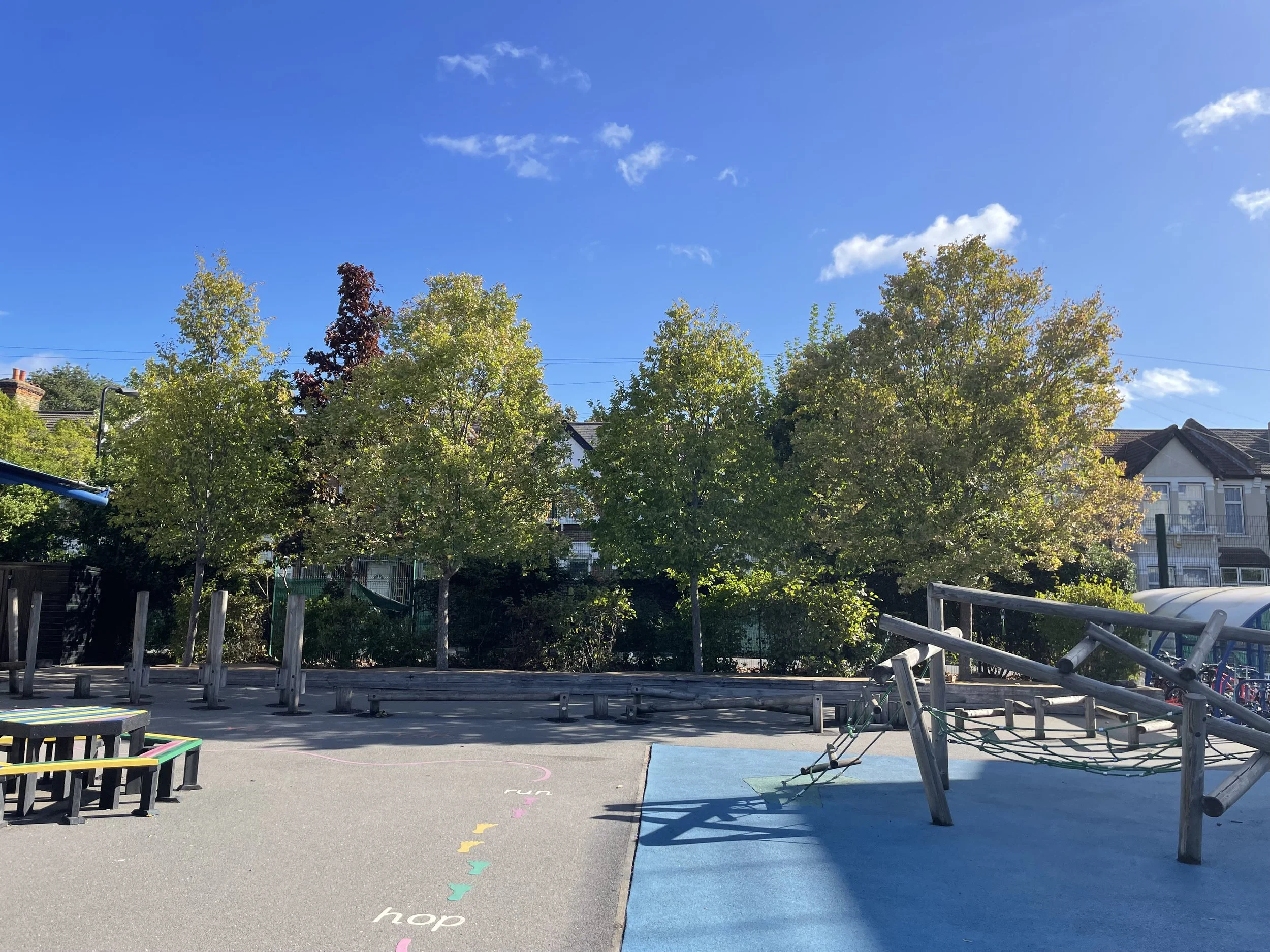
A patchy strip of scrub planted years ago with native trees and shrubs.
The trees were thriving, creating deep shade, but shrubs had failed.
Children had already carved informal tracks through the space.
A rigid raised platform acted as stage/seating.
The headteacher wanted:
Sensory play
Improved wellbeing space
A modest redesign budget
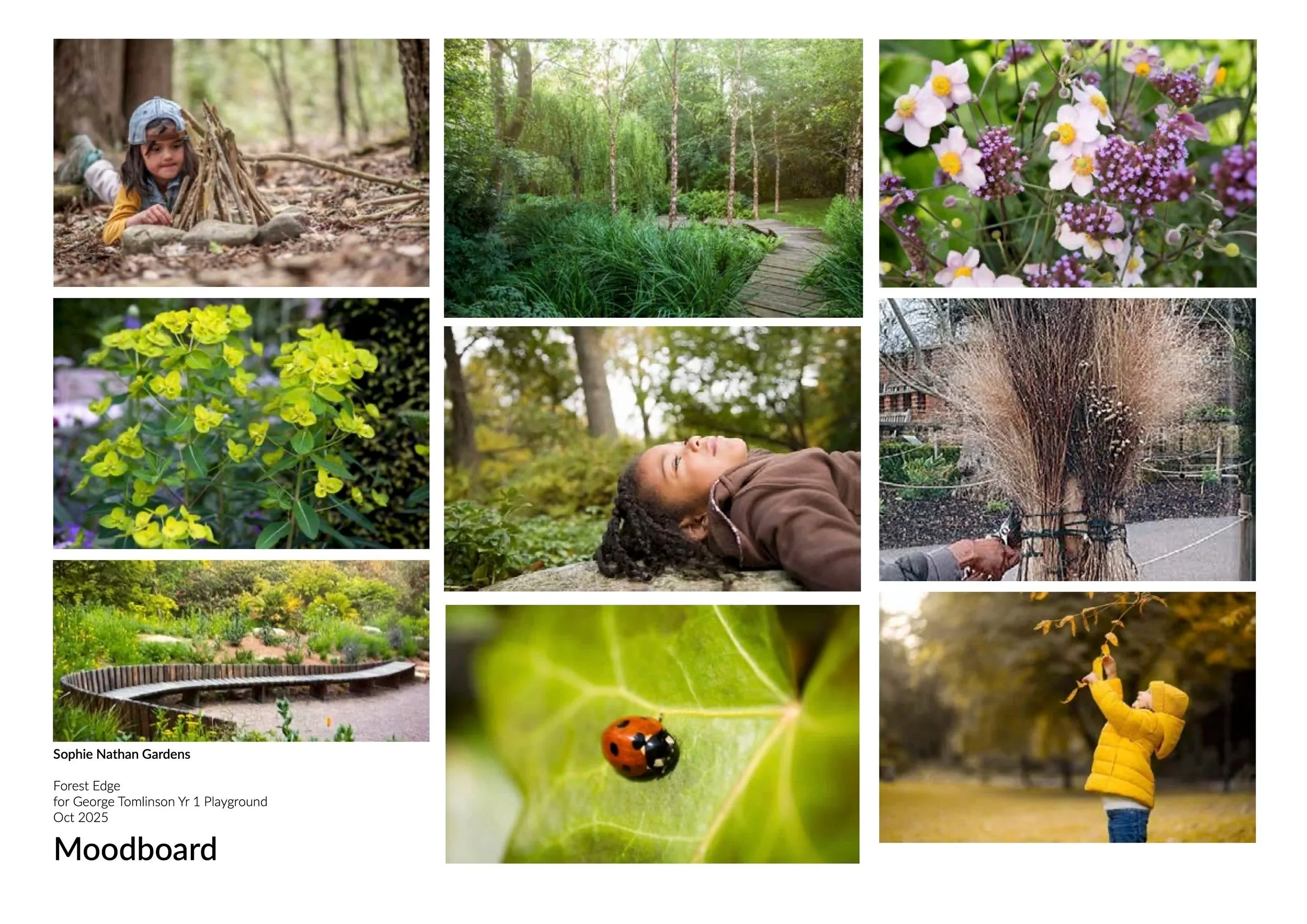
The concept reframed the area as a woodland edge habitat — a space where children move like wildlife, follow trails, and act as caretakers of the edge.
Design Approach
Rather than overwrite the space, I worked with:
The existing canopy
The desire paths created by children
The platform as a gathering clearing
Recycled materials sourced from the users and stakeholders
Key Interventions
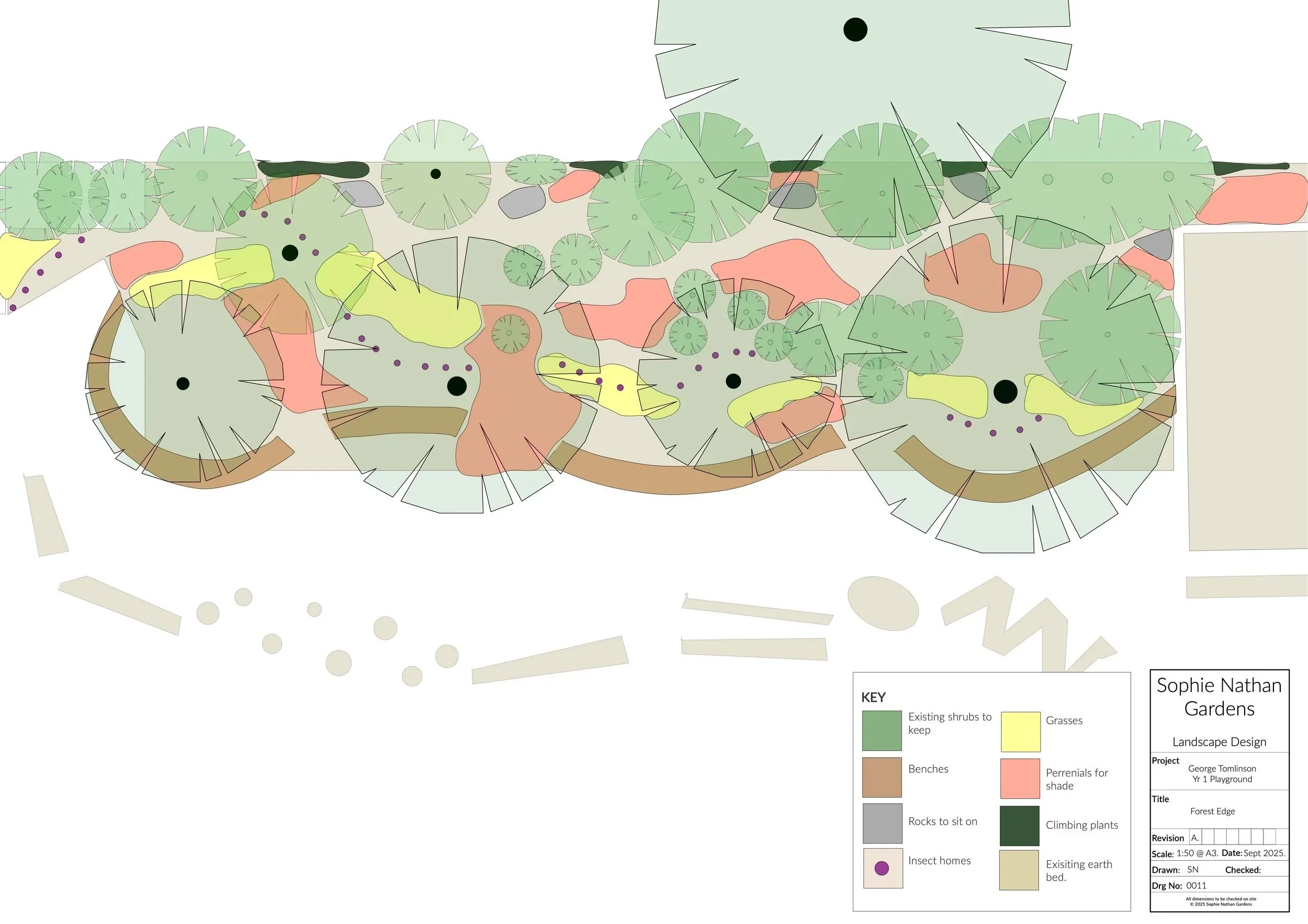
Retained and strengthened existing child-made pathways
Introduced shade-tolerant perennials and grasses to form understorey planting
Added climbing plants to soften the hard boundaries
Designed varied seating from informal seating integrated into planting to gabions using recycled materials
Proposed vertical bug habitats (to be built with pupils)
Enhanced sensory qualities through texture, sound and seasonal change
Outcome
A semi-wild, immersive space that:
Encourages exploration and quiet retreat
Supports biodiversity in a shaded environment
Validates children’s instinctive use of space
Integrates ecological function with wellbeing design
This project demonstrates working with existing ecology and behaviour rather than imposing form.